No products in the cart.
Return To Shop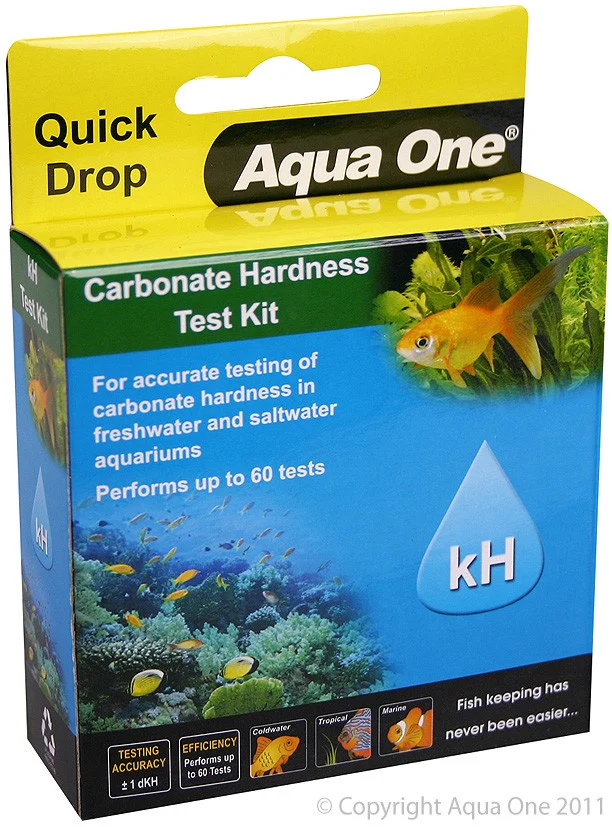


Regular water testing is the best way to curb potential pond/aquarium disasters before they happen. The most commonly tested parameters are pH, Ammonia and Nitrates. But there are other things we can test for that are just as important! The Aqua One QuickDrop Carbonate Hardness (KH) Test Kit allows you to accurately monitor carbonate hardness, helping to prevent sudden pH swings and ensuring your aquarium ecosystem remains balanced.
Carbonate hardness (KH) is a measure of the water’s buffering capacity — its ability to neutralise acids and maintain a stable pH. Low KH can result in dangerous fluctuations in pH, causing stress or even death in fish and invertebrates. By testing KH regularly, you can ensure your aquarium remains a safe, healthy environment where aquatic life thrives.
We offer free water testing in-store — simply bring us a sample, and we’ll check it for you. If you’re not local, most aquarium shops will also provide water testing services.
Keeping stable kH levels is more important than hitting a specific number. These are rough guides – always remember to research your individual species to see what they prefer, all fish and plants are different!
Low KH can lead to unstable water conditions and dangerous fluctuations in pH. Fish may show stress, loss of appetite, listlessness, or sudden deaths due to pH crashes.
$29.95


$29.95
Only 1 left in stock


In stock

In stock

Only 1 left in stock

In stock

Only 2 left in stock

In stock

Only 2 left in stock

In stock

