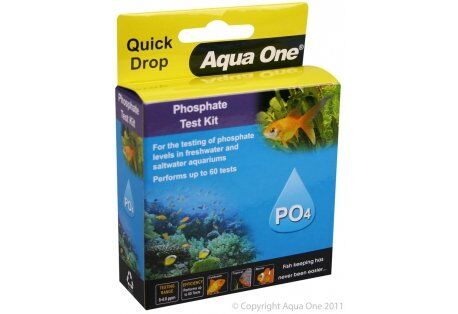
Aqua One Phosphate Test Kit

We were having algal problems in one of our ponds, the nitrates were fine, no ammonia, pH good, what was going on??

Phosphates!  They were sky high!

Phosphates accumulate slowly in fish ponds and aquariums, and the good bacteria doesn’t get rid of it! It’s present in fish foods, fish and plants.

If phosphates are high, do several BIG water changes to reduce it and don’t forget to use chlorine neutraliser!

What Is Phosphate?

Phosphate (PO4) comes from fish waste, uneaten food, and decaying plants. Unlike ammonia and nitrite, beneficial bacteria won’t remove it — so it gradually builds up over time.

  • Ideal phosphate level: As low as possible (under 0.5 ppm) to control algae
  • High phosphate (above 1 ppm) often leads to persistent algae blooms

The Importance of Testing Phosphate

If you’re seeing algae despite good readings for other water parameters, phosphate is often the cause. Regular testing helps you catch rising levels before they get out of control.

    • Test monthly or any time algae becomes a problem
    • Test after heavy feeding or plant die-off

✅ Key Features

  • Accurate phosphate testing for ponds and aquariums
  • Helps identify causes of algae outbreaks
  • Testing range: 1–4.0 ppm
  • Performs up to 60 tests
  • Clear colour chart for quick readings

How to Lower High Phosphate

If your phosphate levels are too high:

  • Perform several large water changes (50–80%) over a few days
  • Use a chlorine neutraliser with each water change
  • Reduce feeding and remove decaying plant matter

Unsure how to manage phosphate in your pond or aquarium? Contact us for free expert advice — we’re always here to help.

Weight 1 kg